
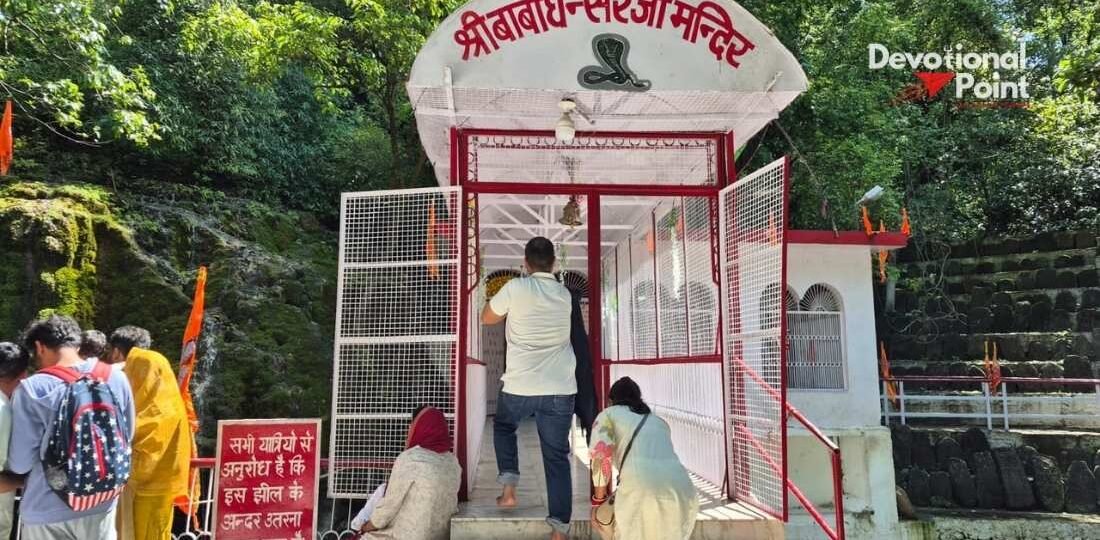
There are plenty of places around Katra that stay busy throughout the year, but some of the most memorable stops are the ones where you can slow down for a while. Baba Dhansar Temple Katra is one of those places. It is also known as Dhansar baba Temple
Located near Karua village, the temple is surrounded by rocky landscapes, greenery and flowing water. The main attraction is the cave shrine and natural Shivling, while a beautiful spring, small waterfall and the sacred Karua Jheel add to the charm of the surroundings. Together, these natural and spiritual elements make Baba Dhansar quite different from the busier pilgrimage spots around Katra.
For travellers staying in Katra, Baba Dhansar makes an easy spiritual outing after Vaishno Devi Darshan. You can take your time here, walk through the natural surroundings and experience a quieter side of the region before returning to Katra.
Baba Dhansar Temple at a Glance
| Detail | Information |
| Temple | Baba Dhansar Temple |
| Deity | Lord Shiva |
| Location | Near Karua village, Reasi district, Jammu & Kashmir |
| From Katra | Around 5–7 km by road |
| Known For | Natural Shivling, cave shrine, waterfall and Karua Jheel |
| Main Festival | Maha Shivratri |
| Type of Visit | Temple + nature excursion |
Distances can vary depending on the route and the point from where you start in Katra.
What Makes Baba Dhansar Temple Special?
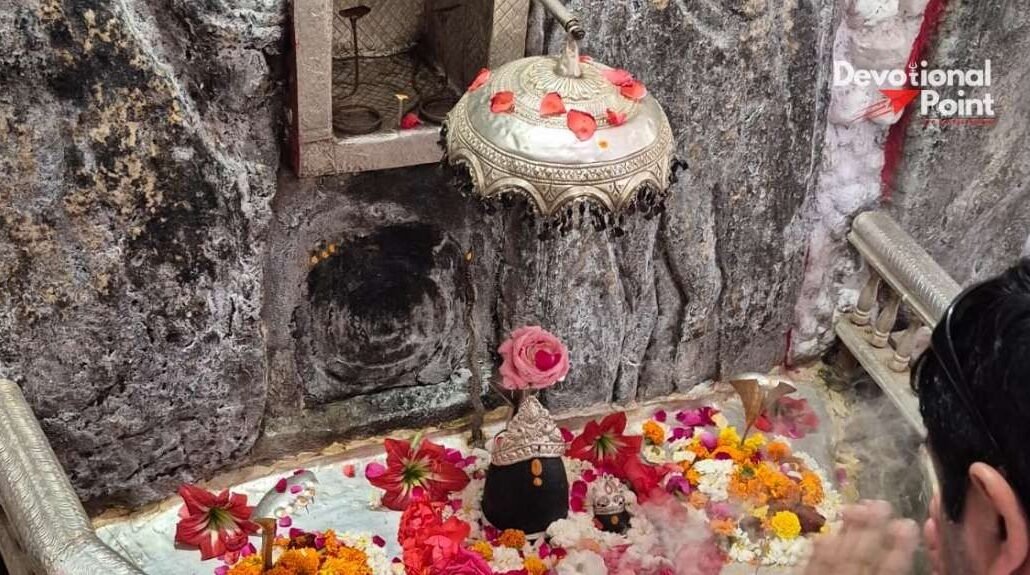
Baba Dhansar is not just a temple visit. Its appeal comes from the combination of spirituality and natural surroundings.
The site is particularly known for:
- A natural Shivling inside a cave-like shrine
- A spring flowing through the rocky landscape
- Baba Dhansar waterfall
- The sacred Karua Jheel
- Green surroundings and rocky formations
- A peaceful atmosphere away from the busy areas of Katra
The flowing water and surrounding rocks make the place especially attractive for visitors who want to combine a religious visit with some time in nature.
Baba Dhansar Temple History and Local Legend
The religious traditions connected with Baba Dhansar are largely preserved through local belief and oral storytelling.
According to one popular tradition, the story of Baba Dhansar is connected with Sheshnag and Lord Shiva. Sheshnag is believed to have taken human form, and Baba Dhansar is traditionally regarded as being associated with this lineage.
Another local story tells of a demon that was troubling people in the surrounding area. Baba Dhansar is said to have sought the help of Lord Shiva, after which the villagers were relieved from the problem.
These stories are part of the faith and cultural traditions associated with the shrine. They should be understood as religious legends rather than as historically verified events.
The Natural Shivling at Baba Dhansar
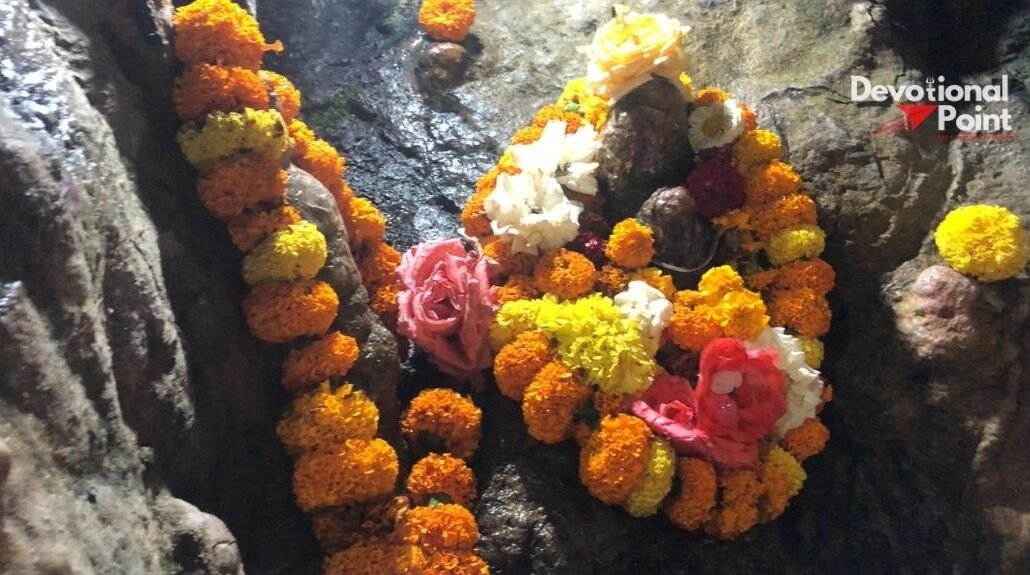
For devotees, the cave shrine is the heart of the Baba Dhansar experience.
The Shivling is naturally formed, and water drips from the rock formation above it. The continuous movement of water gives the cave a distinctive appearance and has become an important part of the shrine’s religious identity.
Darshan here is generally a simple experience. Rather than spending a long time inside the cave, visitors usually offer prayers and move ahead to allow others to enter.
If you are visiting with children, take extra care around the wet and uneven surfaces.
Baba Dhansar Temple Distance from Katra
The Baba Dhansar Temple distance from Katra is around 5–7 km by road. The exact distance can vary depending on your starting point in Katra and the road taken.
The journey is relatively short compared with many other attractions around the region, so Baba Dhansar can easily be included in a Katra sightseeing plan.
If you are visiting after completing the Vaishno Devi Yatra, keep some additional time for the walk from the road to the temple, exploring the waterfall and spending time around the natural surroundings.
Karua Jheel – The Sacred Water Body
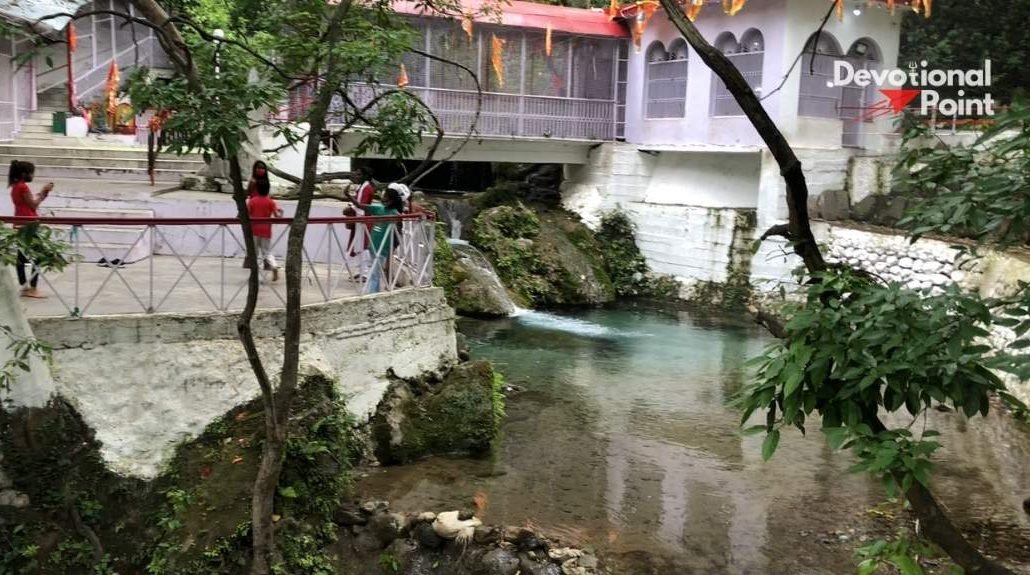
One of the interesting features of Baba Dhansar is Karua Jheel, the water body located close to the shrine.
The pond is regarded as sacred by local devotees. Religious traditions associated with the site discourage bathing in the pond itself, while the flowing water further along the stream is treated differently.
This is an important distinction for visitors. Baba Dhansar is not simply a waterfall destination or picnic spot. The water, cave and surrounding landscape all have religious importance.
If you plan to spend time near the water, follow the instructions given locally and avoid entering restricted areas.
Baba Dhansar Waterfall
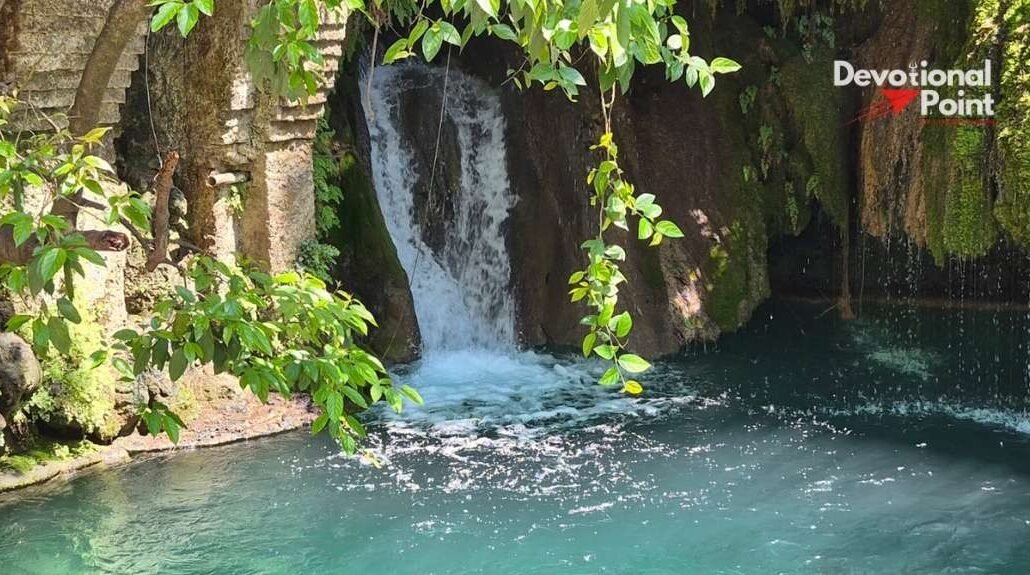
The waterfall is one of the reasons the temple attracts visitors beyond those coming specifically for darshan.
Water flows through the rocky terrain and forms a series of small cascades around the shrine. After rain, the landscape can look particularly green and the flow of water may become stronger.
That also means the rocks and steps can become slippery.
Wear footwear with a good grip and avoid getting too close to fast-moving water, particularly if you are travelling with children.
Baba Dhansar Temple Katra Timings
Baba Dhansar Temple is commonly visited during the daytime, with reported opening hours generally falling between morning and evening.
A practical visiting window is:
| Baba Dhansar Temple | Timings |
|---|---|
| Opening Time | 06:00 AM |
| Closing Time | 07:00 PM |
Timings can change because of local arrangements, religious occasions and festivals. If you are travelling specifically for darshan, it is sensible to confirm the day’s timings locally before leaving Katra.
When is the best time for darshan?
If you want a relatively peaceful experience, morning is usually the better choice. You also get more daylight for exploring the waterfall and surrounding area.
During Maha Shivratri, expect a very different atmosphere, with larger numbers of devotees and religious activity around the temple.
Baba Dhansar Temple Trek and Steps
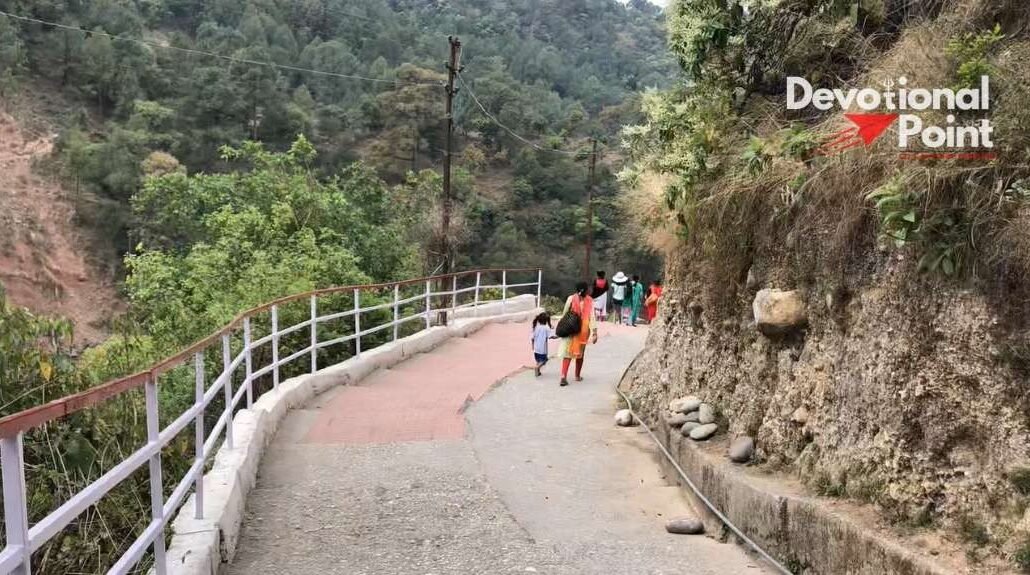
The Baba Dhansar trek is a short walking section from the road towards the temple and natural spring.
The path includes steps and uneven sections, so comfortable footwear is recommended. It is not a long Himalayan trek, but the terrain can feel more difficult when the ground is wet.
During or after rain, take extra care around the steps and rocks. Families travelling with young children should keep them close, particularly around the waterfall and water areas.
If you have elderly travellers in your group, allow enough time for the walk instead of treating it as a quick stop.
How to Reach Baba Dhansar from Katra
The easiest way to visit Baba Dhansar is by road from Katra.
By Taxi
A taxi is the most convenient option for families and visitors who want a straightforward trip from Katra. You can hire a local cab and plan the return journey at the same time.
By Auto-Rickshaw
Local autos may also be available for the journey. Since the availability and return arrangements can vary, discuss the complete journey with the driver before leaving.
By Private Vehicle
If you have your own car, you can drive from Katra towards the Karua/Dhansar area. The vehicle does not take you directly inside the temple area, so a walking section remains at the end.
The Final Approach
One thing first-time visitors should know is that Baba Dhansar is not a roadside temple.
After reaching the approach area, you need to continue on foot towards the shrine. There are steps and uneven sections, so allow enough time and avoid rushing.
Best Time to Visit Baba Dhansar
The best time depends on what you want to experience.
March to June
These months can be comfortable for combining temple darshan with time outdoors. Start early if you want to avoid the stronger afternoon heat.
Monsoon
Rain can transform the surrounding landscape and increase the flow of the waterfall. However, wet rocks and steps require extra caution.
After Monsoon
The greenery around the temple can remain attractive after the rains, making this a good period for visitors who want to enjoy both the spiritual and natural sides of the place.
Maha Shivratri
For devotees, Maha Shivratri is one of the most important occasions at Baba Dhansar. The temple area becomes much more active, and a larger gathering is expected.
If your priority is peaceful darshan, choose a normal day instead of the festival period.
Things to Know Before Visiting Baba Dhansar
A few simple precautions can make the experience much better:
- Wear shoes with a good grip.
- Avoid walking quickly on wet rocks.
- Keep children away from deep or fast-moving water.
- Respect restrictions around Karua Jheel.
- Carry drinking water for the walk.
- Avoid littering around the temple and waterfall.
- Dress appropriately for temple darshan.
- Carry cash for small local expenses if required.
- During monsoon, check local conditions before travelling.
- If visiting on Maha Shivratri, expect crowds and allow extra time.
Baba Dhansar Temple Katra FAQs
Where is Baba Dhansar Temple Katra located?
Baba Dhansar Temple Katra is located near Karua village in Reasi district of Jammu & Kashmir, within driving distance of Katra.
How far is Baba Dhansar Temple from Katra?
Baba Dhansar Temple is approximately 12–15 km from Katra by road, although the exact distance can vary depending on your starting point and route.
What is Baba Dhansar Temple famous for?
Baba Dhansar Temple is known for its cave shrine, natural Shivling, flowing spring, Karua Jheel and waterfall, making it a popular spiritual stop near Katra.
How can I reach Baba Dhansar Temple from Katra?
You can reach Baba Dhansar Temple Katra by taxi, auto-rickshaw or private vehicle. The final stretch to the shrine needs to be covered on foot.
Is Baba Dhansar Temple a Shiva temple?
Yes. The cave shrine at Baba Dhansar is associated with Lord Shiva, and devotees visit the naturally formed Shivling for darshan.
Is Baba Dhansar Temple suitable for children?
Yes, families can visit Baba Dhansar, but children should be supervised around the steps, rocks and flowing water.
What is the best time to visit Baba Dhansar Temple Katra?
For a quieter visit, morning hours on regular days are a good choice. Maha Shivratri is also an important occasion when devotees visit the temple for special religious celebrations.
Can I visit Baba Dhansar Temple after Vaishno Devi Darshan?
Yes. Baba Dhansar Temple Katra is separate from the main Vaishno Devi route and can be planned as an additional outing from Katra. Keep enough time for the road journey, the walk to the shrine and your return.
Book Katra Tour Package Now
Vaishno Devi Tour Package
Book Now
The Vaishno Devi Shiv Khori Tour Package 2 Night 3 Days from Katra is a perfectly curated pilgrimage for devotees…
Here's how you can book your spot for the Vaishno Devi Attka Aarti Online Booking Procedure. The Aarti at Vaishno…
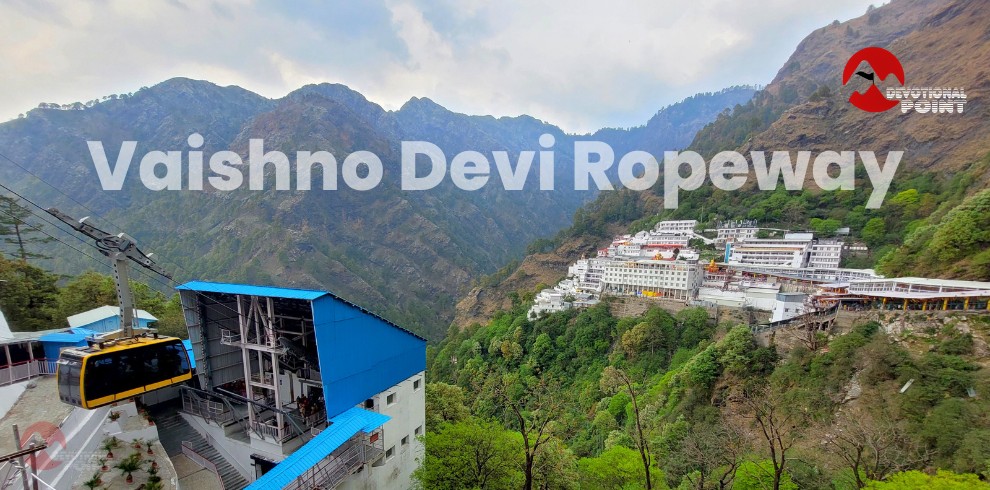
The Vaishno Devi Ropeway is a modern and efficient way to travel between Bhawan and Bhairo Ghati, offering pilgrims a…
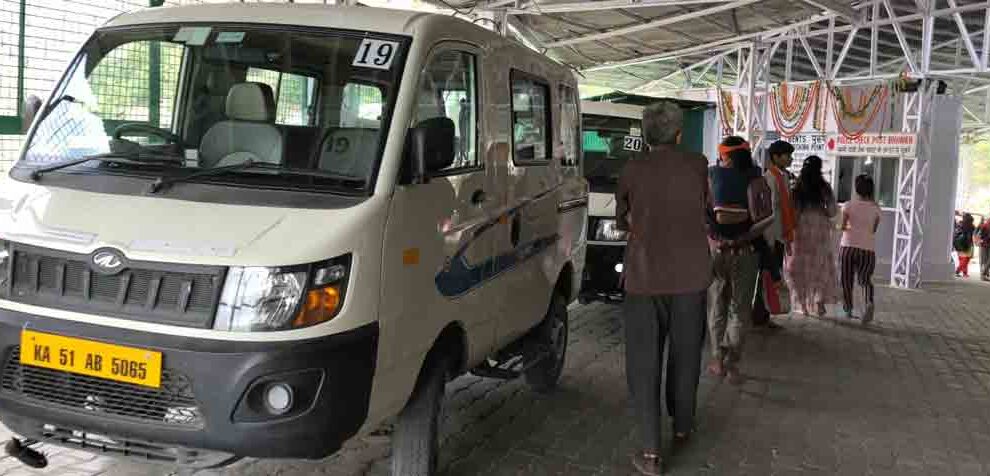
Vaishno Devi Battery car Online booking for Shri Mata Vaishno Devi Yatra which is 13.5km Yatra from Katra, which is…
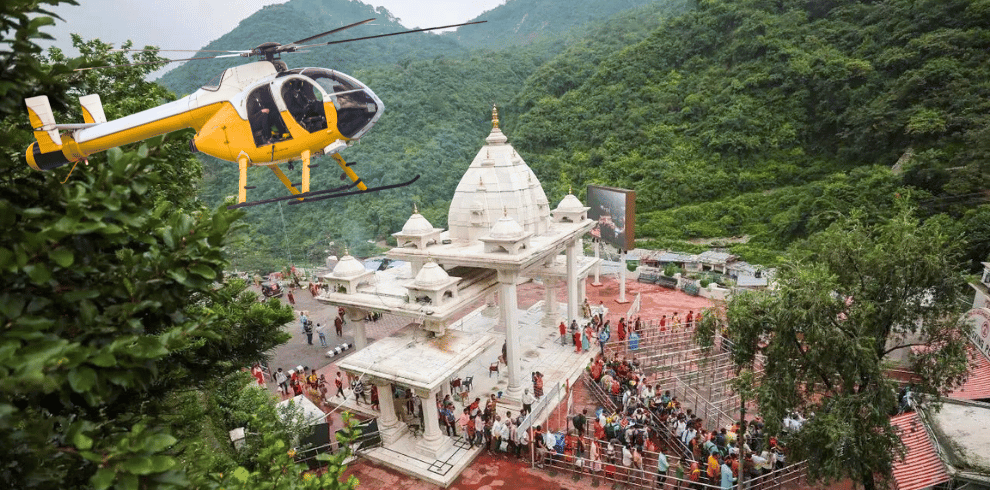
Booking a helicopter ride to Vaishno Devi is one of the most convenient ways to reach the sacred shrine, especially…
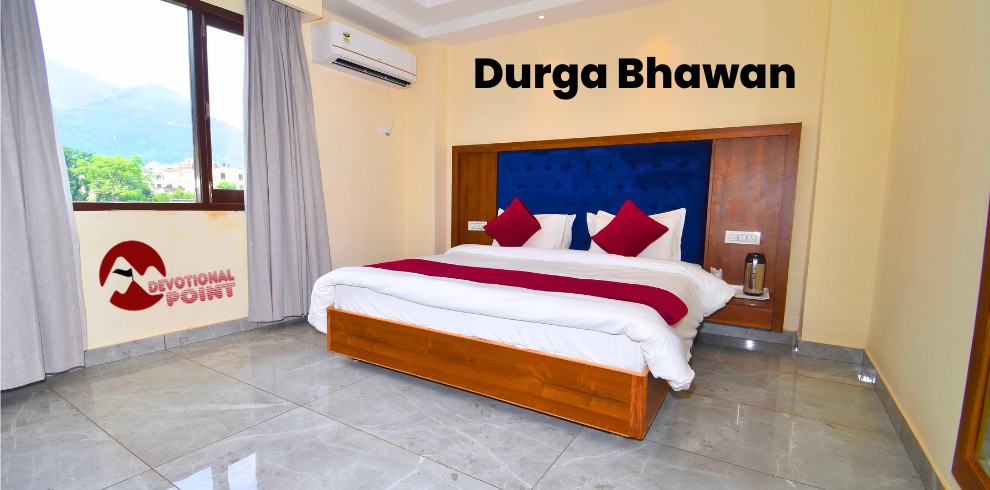
Are you looking for Vaishno Devi Bhawan Room Booking then book room only just Rs 1,200 at bhawan main temple…