
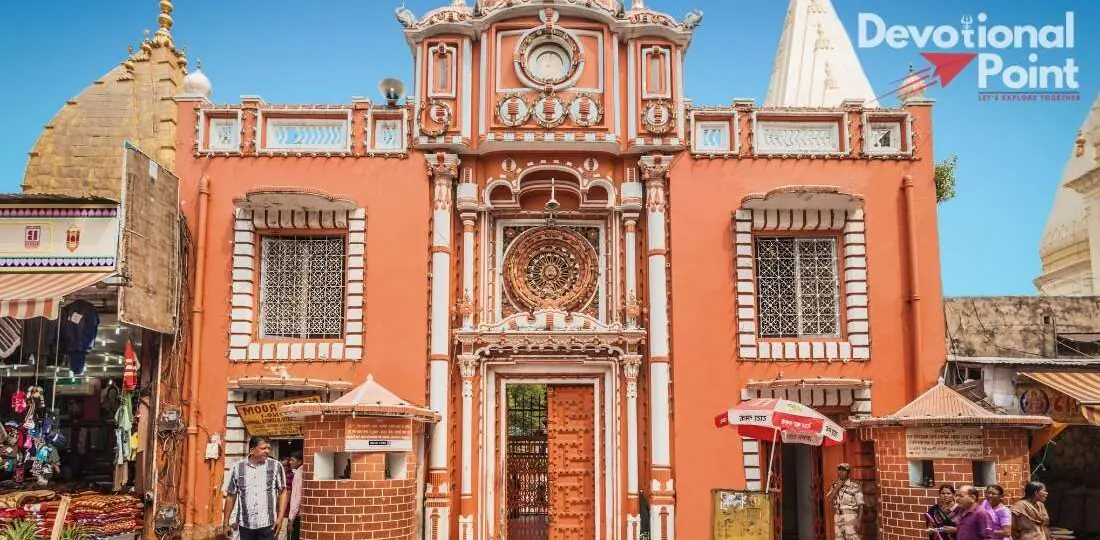
Raghunath Temple Jammu is one of the most prominent Hindu temples in Jammu and an important part of the city’s religious and cultural heritage. Dedicated primarily to Lord Rama, also worshipped as Raghunath Ji, the temple is known for its historic connection with the Dogra rulers, impressive architecture, multiple shrines and richly decorated interiors. Located in the heart of Jammu city near the famous Raghunath Bazaar, it is also a convenient place to visit for pilgrims travelling toward Katra and Mata Vaishno Devi.
For travellers planning a visit, knowing the Raghunath Temple Jammu timings, aarti schedule, location and how to reach the temple can make the experience much easier. The temple can be included in a Jammu sightseeing itinerary along with other important attractions such as Ranbireshwar Temple, Mubarak Mandi Palace and Bahu Fort. Whether you are visiting for darshan, learning about Jammu’s history or simply exploring its famous temples, Raghunath Temple offers a meaningful stop in the city.
Why Raghunath Temple Is Famous
Raghunath Temple is famous for its religious importance, historic background and distinctive architecture. The temple complex is primarily dedicated to Lord Rama and is traditionally associated with the worship of Raghunath Ji. At the same time, the complex contains several other shrines dedicated to different Hindu deities, making it a significant centre of worship for devotees following different traditions.
One of the most striking features of the temple is its collection of shrines and tall shikharas. The complex is not simply a single small temple but a large religious establishment containing seven principal shrines. The main shrine is associated with Lord Rama, Mata Sita and Lord Lakshman, while other areas of the complex contain sacred images and representations of other deities.
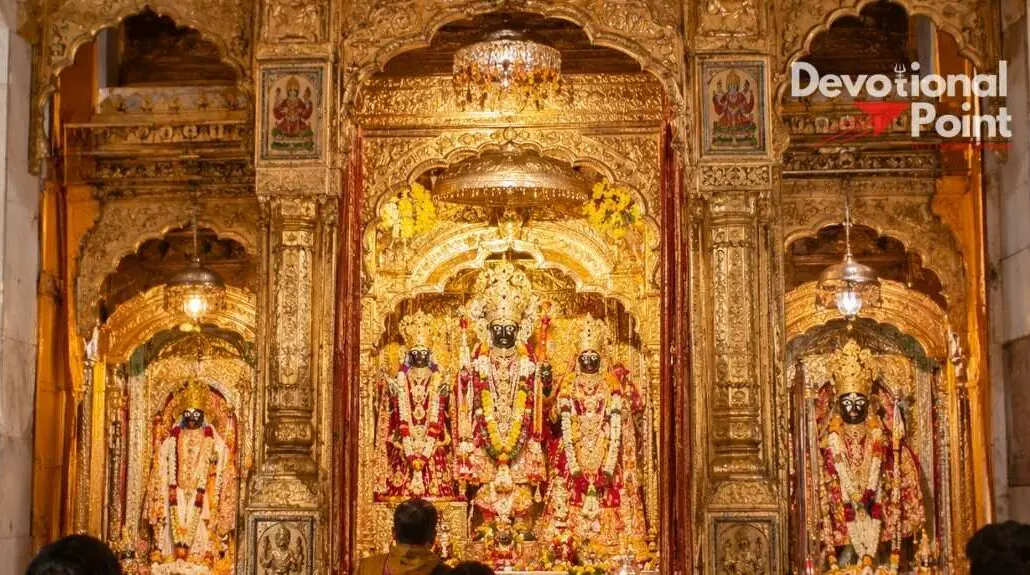
The temple is also known for its beautifully decorated interiors. Gold-covered sections, intricate architectural details and religious artwork give the temple a distinctive appearance. Its association with the Dogra rulers further adds to its historical importance. For visitors exploring Jammu, Raghunath Temple provides an opportunity to experience the city’s religious traditions and royal-era heritage in one place.
History of Raghunath Temple Jammu
The history of Raghunath Temple Jammu is closely connected with the Dogra rulers of Jammu. The construction of the temple complex began during the reign of Maharaja Gulab Singh in the nineteenth century and was continued and completed during the reign of his son, Maharaja Ranbir Singh.
The temple was developed as a major religious centre and became one of the important landmarks of Jammu. Its scale and architectural design reflect the importance given to religious institutions during the Dogra period. Over the years, the temple became closely associated with the cultural and spiritual identity of Jammu.
Today, the temple remains an important place of worship while also attracting visitors interested in the history and architecture of the region. When you walk through the complex, you are not simply visiting a temple; you are also seeing a part of Jammu’s nineteenth-century heritage.
Maharaja Gulab Singh and Maharaja Ranbir Singh
Maharaja Gulab Singh played an important role in starting the construction of Raghunath Temple. His son, Maharaja Ranbir Singh, continued the project and is associated with its completion. This connection with two prominent Dogra rulers is one of the major reasons the temple holds such an important position in Jammu’s history.
The temple therefore represents the combination of religion, royal patronage and architecture that shaped much of nineteenth-century Jammu. The rulers supported the development of important religious institutions, and Raghunath Temple became one of the most prominent examples of this tradition.
For history lovers, the temple offers an interesting glimpse into the period when Jammu’s religious landscape was being shaped by the Dogra dynasty. Its continued presence in the old city makes it an important heritage landmark as well as a place of worship.
Architecture and Religious Significance
The architecture of Raghunath Temple is one of its major attractions. The complex contains several shrines, tall shikharas, decorative elements and richly finished interiors. The overall design creates a grand appearance that is noticeably different from a small neighbourhood temple.
The main temple is dedicated to Lord Rama, and the religious atmosphere of the complex reflects the importance of Rama worship. However, visitors can also find shrines and sacred representations connected with other Hindu traditions. This makes the temple complex particularly interesting for pilgrims who wish to experience more than one form of worship during their visit.
The temple also has cultural importance because of its association with Sanskrit learning and religious literature. Historical accounts mention its collection of manuscripts and sacred texts, adding an educational dimension to the temple’s religious role.
Seven Shrines and Golden Interiors
One of the most notable architectural characteristics of Raghunath Temple is its seven principal shrines. Each shrine has its own shikhara, giving the complex a distinctive skyline. Instead of focusing entirely on one sanctum, the temple provides visitors with a broader religious environment containing multiple sacred spaces.
The interiors are equally impressive. Parts of the main temple are decorated with gold-covered surfaces, creating a rich and distinctive appearance. The combination of traditional architecture, decorative work and sacred imagery makes the interior particularly memorable.
Visitors should take their time while exploring the complex, but it is important to remember that the temple remains an active place of worship. Photography, movement and other visitor activities should always follow the rules in force at the temple.
Deities and Sacred Collections
Although Lord Rama is the principal deity, the temple complex includes representations of several other important Hindu deities. Visitors may encounter sacred images and shrines associated with Lord Shiva, Lord Vishnu, Lord Hanuman, Lord Surya and other deities.
The complex is also associated with collections of Saligrams, sacred objects and religious manuscripts. These features give Raghunath Temple significance beyond ordinary temple architecture.
For visitors interested in Hindu traditions, the temple can therefore be both a spiritual destination and a cultural experience. It provides an opportunity to see how different forms of worship and religious traditions have been brought together within a historic temple complex.
Raghunath Temple Jammu Timings
The general visiting hours commonly published for Raghunath Temple are 6:00 AM to 8:00 PM. However, temple routines can change because of festivals, special pujas, religious events or local arrangements. Visitors who are planning their journey specifically around darshan or aarti should confirm the schedule locally before travelling.
| Temple Information | Timings |
|---|---|
| Morning Opening | Around 6:00 AM |
| General Darshan Hours | Around 6:00 AM to 8:00 PM |
| Evening Closing | Around 8:00 PM |
Best Time to Visit Raghunath Temple
The best time to visit Raghunath Temple in Jammu is from October to March, when the weather is generally cooler and more comfortable for sightseeing and temple visits. November to February can be particularly pleasant for exploring Jammu, while morning and early evening are generally convenient times for darshan. The temple remains open to visitors throughout the year, so your ideal month ultimately depends on whether you prefer comfortable weather, fewer crowds or the festive atmosphere.
Raghunath Temple: Month-Wise Visiting Guide
| Month | What to Expect | Best For |
|---|---|---|
| January | Cool winter weather makes outdoor sightseeing comfortable, although mornings and evenings can be chilly. | Temple visits and Jammu sightseeing |
| February | Pleasant winter conditions continue, making it a comfortable month to explore the temple and nearby attractions. | Darshan and sightseeing |
| March | Temperatures gradually become warmer, but the weather is still generally suitable for exploring Jammu. | Comfortable temple visits |
| April | Daytime temperatures start rising, so morning visits are more comfortable. | Early morning darshan |
| May | Jammu can become quite warm during the day. Plan your visit during cooler hours. | Early morning visits |
| June | Hot weather can make daytime sightseeing less comfortable. Morning or evening is preferable. | Short temple visits |
| July | The monsoon season can bring rain and humidity. Check the weather before planning outdoor sightseeing. | Temple visit with flexible plans |
| August | Warm and humid conditions may continue, with occasional rain. Morning and evening can be more comfortable. | Darshan and nearby sightseeing |
| September | Weather gradually begins to improve, although some days can still be warm. | Temple visits |
| October | Cooler weather begins to return, making this a good month for temple visits and Jammu sightseeing. | Comfortable sightseeing |
| November | Pleasant and cooler weather makes this one of the more comfortable periods to explore Jammu. | Darshan and sightseeing |
| December | Winter sets in, with cool mornings and evenings. Daytime sightseeing is generally comfortable. | Winter temple visits |
Raghunath Temple Jammu Aarti Timings
Aarti is an important part of the daily religious routine at Raghunath Temple, Jammu. The temple traditionally observes morning aarti at around 7:00 AM and evening aarti at around 6:00 PM. These timings can be particularly meaningful for devotees who want to experience the temple’s devotional atmosphere along with darshan.
| Aarti | Timing | Details |
|---|---|---|
| Morning Aarti | 7:00 AM | Begin your temple visit with the morning prayer and aarti. |
| Evening Aarti | 6:00 PM | Aarti is performed in the evening as part of the temple’s daily worship. |
Important Note About Aarti Timings
Aarti timings may change on festivals, special occasions or due to temple arrangements. If your visit is specifically planned around the aarti, it is advisable to confirm the timing locally before travelling.
For a more relaxed visit, arrive a little before the scheduled aarti so you have enough time for entry, security checks and darshan without rushing.
Raghunath Temple Jammu Location
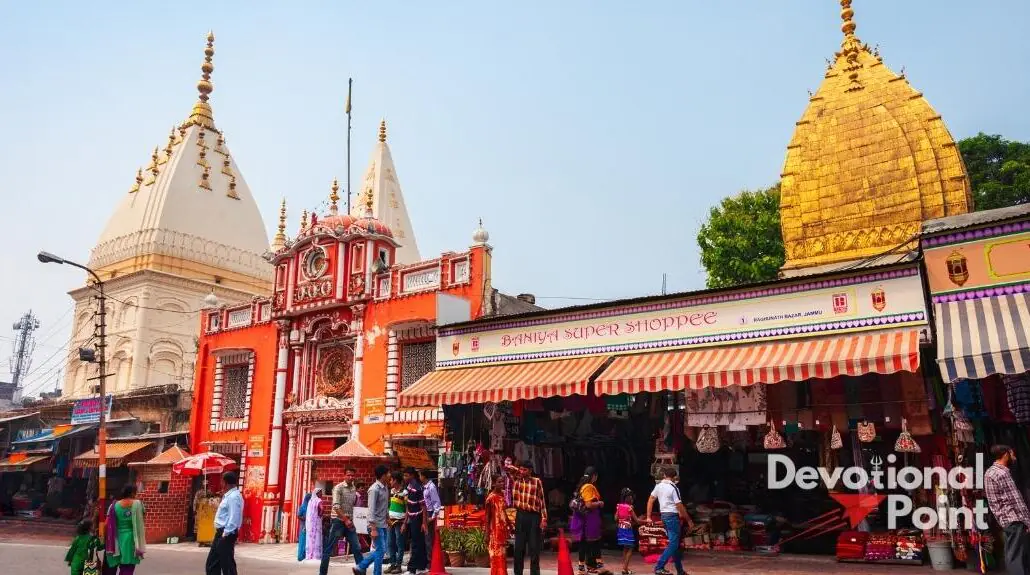
Raghunath Temple is located in the heart of Jammu city, making it one of the easiest major temples to include in a city sightseeing itinerary. The temple is situated around Raghunath Mandir Chowk and Raghunath Bazaar, a well-known area of central Jammu.
Its central location is particularly convenient for visitors arriving by train or bus. It also makes the temple a practical stop for travellers who want to explore Jammu before continuing toward Katra and Mata Vaishno Devi.
Address and Nearby Landmark
Raghunath Temple Address:
Raghunath Mandir Chowk, Jammu City, Jammu and Kashmir – 180001
The easiest landmark to use when navigating to the temple is Raghunath Bazaar. The temple is surrounded by one of Jammu’s well-known traditional shopping areas, so visitors can combine their temple visit with a walk through the local market.
Because this is a busy central area, traffic can sometimes be heavy. Travellers should allow additional time when visiting during festivals, weekends or peak shopping hours.
How to Reach Raghunath Temple Jammu
Raghunath Temple is well connected with the main transport points of Jammu. According to the Jammu district administration, the temple is approximately 7 km from Jammu Tawi Railway Station, 8 km from Jammu Airport and about 0.5 km from the Jammu Bus Stand.
| Starting Point | Approximate Distance | Best Option |
|---|---|---|
| Jammu Tawi Railway Station | About 7 km | Taxi/auto/local transport |
| Jammu Airport | About 8 km | Taxi/cab |
| Jammu Bus Stand | About 0.5 km | Walk/local transport |
| Central Jammu | Nearby | Auto, taxi or walking |
Actual travel time depends on traffic and road conditions, so the distances should be used for general planning rather than exact journey estimates.
From Jammu Railway Station
Jammu Tawi Railway Station is one of the major entry points for pilgrims travelling to Jammu and Katra. The temple is approximately 7 km from the railway station.
You can hire a taxi, auto-rickshaw or other local transport from the station. If you have heavy luggage, taking a direct taxi to your hotel first may be more comfortable before visiting the temple.
From Jammu Airport
Jammu Airport is approximately 8 km from Raghunath Temple. A taxi or cab is generally the most convenient choice, especially if you are travelling with luggage or family members.
If you are planning to attend a specific aarti immediately after landing, avoid keeping the schedule too tight. Flight delays, baggage collection and city traffic can all affect your arrival time.
By Road and Local Transport
Raghunath Temple is easy to access by road because it is located in central Jammu. Local taxis, auto-rickshaws and other city transport options can be used to reach the Raghunath Bazaar area.
The nearby bus stand makes the temple particularly convenient for visitors arriving by bus. If your accommodation is already in central Jammu, walking may also be possible depending on the distance and weather.
Raghunath Temple Jammu Distance from Major Places
| Place | Approx. Distance from Raghunath Temple |
|---|---|
| Reasi | 70-75 km |
| shiv khori | 85-96 km |
| Katra | 45–50 km |
| Vaishno Devi Bhawan | 55–60 km |
Places to Visit Near Raghunath Temple
One of the advantages of visiting Raghunath Temple is that you can combine it with several other Jammu tourist attractions. Rather than spending your entire day travelling between distant places, you can create a convenient sightseeing route around the city’s historic and religious landmarks.
Ranbireshwar Temple
Ranbireshwar Temple is one of the most important Shiva temples in Jammu and a natural addition to a religious sightseeing itinerary. The temple is dedicated to Lord Shiva and is known for its large central shivling along with numerous smaller Shiva lingams.
The temple has a strong connection with the Dogra period and was built under Maharaja Ranbir Singh. Its traditional architecture and peaceful devotional atmosphere make it an interesting contrast to Raghunath Temple.
If you enjoy visiting historic temples, you can include both Raghunath Temple and Ranbireshwar Temple in the same Jammu sightseeing plan.
Mubarak Mandi Palace
Mubarak Mandi Palace is one of Jammu’s most important historic heritage complexes. It served as a royal residence of the Dogra rulers and contains buildings displaying a mixture of architectural influences.
The palace complex is particularly interesting for travellers who want to understand the royal history of Jammu. Its historic setting makes it a useful addition after visiting Raghunath Temple, especially if you are interested in the connection between the Dogra rulers and Jammu’s religious architecture.
Bahu Fort
Bahu Fort is another famous Jammu landmark located on a hill overlooking the Tawi River. The historic fort is associated with Jammu’s long political and cultural history and offers views over parts of the city.
The fort also contains the Bave Wali Mata Temple, making it another important religious destination for pilgrims.
Peer Kho Cave Temple
Peer Kho Cave Temple is an ancient Shiva temple associated with a natural cave. It is located near the Tawi River and is regarded as one of the important religious sites in Jammu.
The cave setting gives the temple a different character from the large urban architecture of Raghunath Temple. Visitors interested in Shiva worship and traditional pilgrimage sites may enjoy including Peer Kho in their itinerary.
Raghunath Bazaar
Raghunath Bazaar is located around the temple and is one of Jammu’s well-known shopping areas. Visitors can explore shops selling traditional goods, clothing, handicrafts, dry fruits, religious items and other products.
The market is particularly useful if you want to experience the everyday commercial side of Jammu after visiting the temple. Keep in mind that it can become crowded, so travellers with elderly family members should move carefully through busy areas.
What Devotees Should Know Before Darshan
Before visiting Raghunath Temple, it is useful to remember that this is an active religious site, not simply a tourist monument. Visitors should dress respectfully and follow the instructions given by temple authorities. Footwear generally needs to be removed in designated areas, and visitors should maintain appropriate behaviour inside the temple.
Avoid disturbing devotees during prayers or rituals. If photography or mobile-phone use is restricted in particular areas, follow those rules. Temple arrangements can change, so instructions given at the entrance should take priority over information found in older travel guides.
If you are travelling with children, senior citizens or people with limited mobility, allow extra time for the visit. The surrounding market can be crowded, and traffic conditions may change throughout the day.
For devotees planning to attend aarti, confirm the exact timing on the day of your visit. Online schedules are useful for planning but should not be treated as permanently fixed. Festival days and special religious occasions may have separate arrangements.
FAQs About Raghunath Temple Jammu
1. What are the timings of Raghunath Temple Jammu?
The commonly published general visiting hours are 6:00 AM to 8:00 PM. Timings can change because of festivals, special pujas and temple arrangements, so confirm locally before travelling specifically for aarti.
2. What is the aarti timing at Raghunath Temple Jammu?
The morning aarti at Raghunath Temple is held around 7:00 AM, while the evening aarti is held around 6:00 PM. Timings may vary on festivals or special occasions, so visitors should confirm the schedule locally before planning their visit specifically around aarti.
3. Where is Raghunath Temple located?
Raghunath Temple is located at Raghunath Mandir Chowk, Jammu City, Jammu and Kashmir – 180001, near the famous Raghunath Bazaar.
4. How far is Raghunath Temple from Jammu Railway Station?
Raghunath Temple is approximately 7 km from Jammu Tawi Railway Station. A taxi, auto-rickshaw or other local transport can be used to reach the temple.
5. Is Raghunath Temple worth visiting before Vaishno Devi?
Yes. Raghunath Temple is a good addition to a Jammu pilgrimage itinerary, especially if you want to explore the city’s religious heritage and Dogra-era history before travelling onward to Katra and Mata Vaishno Devi.
Book Jammu Tour Package Now
Jammu & Vaishno Devi Tour Package
Book Now
The Vaishno Devi Shiv Khori Tour Package 2 Night 3 Days from Katra is a perfectly curated pilgrimage for devotees…
Dehradun Tour Package Explore the spiritual essence for and natural beauty of Uttarakhand with Devotional Point Tour & Travels, your…
Are you dreaming of an unforgettable honeymoon or a luxurious escape amidst breathtaking natural beauty? Look no further than Kashmir,…

Are you dreaming of a honeymoon that combines romance, adventure, and unforgettable landscapes? Look no further than the stunning beauty…

Are you dreaming of a honeymoon that combines romance, adventure, and unforgettable landscapes? Look no further than the stunning beauty…
Looking for a perfect blend of adventure and spirituality? The Chopta Tungnath Package from Delhi is exactly what you need….