
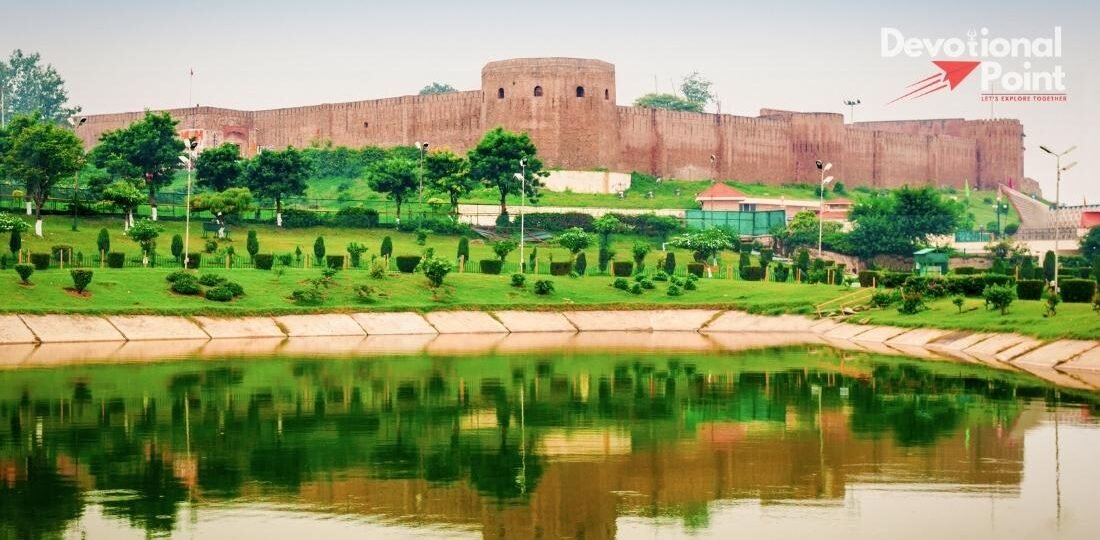
If you are planning a sightseeing trip around Jammu, Bahu Fort and Bagh-e-Bahu Garden deserve a place on your itinerary. Sitting on a rocky hill beside the Tawi River, this historic attraction combines an ancient fort, a revered temple, landscaped gardens, panoramic views and a strong connection with Jammu’s cultural identity. The official District Jammu tourism website places Bahu Fort about 5 km from the city centre, while Bagh-e-Bahu is described as a terraced garden beside the fort overlooking the Tawi.
The attraction is interesting because it is not simply a monument that you walk around for half an hour. The fort has a religious side through Bawe Wali Mata Temple, while the garden provides a much more relaxed setting for families, couples, photographers and anyone who wants to enjoy the Jammu skyline. The Jammu Tourism Department also describes the fort as an ancient structure traditionally associated with Raja Bahu Lochan and notes that the Bagh-e-Bahu garden lies just beneath it.
Before visiting, however, there is one practical point to remember: published timings and ticket information vary between tourism and travel listings. Current online listings commonly show different schedules for the fort and garden, so visitors should verify the day’s operating hours and entry charges locally before travelling. This guide brings together the current information available online while clearly separating established facts from figures that can change.
What Is Bahu Fort & Garden?
Bahu Fort & Garden is a combined heritage and recreational attraction in Jammu. The fort occupies a prominent position above the Tawi River, while Bagh-e-Bahu is the landscaped garden developed around and below the historic structure. According to the District Jammu administration, the fort stands on the left bank of the Tawi and is regarded as one of the city’s oldest structures. The same source says the original fort is traditionally attributed to Raja Bahulochan and was later improved and extended by the Dogra rulers.
What makes the destination particularly appealing is the contrast between its different experiences. Inside the fort area, you encounter history and religious devotion, especially at the temple dedicated to Goddess Kali, popularly known as Bawey Wali Mata. Outside, Bagh-e-Bahu offers lawns, flowers, fountains, pathways and views across Jammu. In other words, it feels a little like visiting several attractions in one stop: a historical monument, a pilgrimage site, a city viewpoint and a landscaped public garden.
Bahu Fort and Bagh-e-Bahu
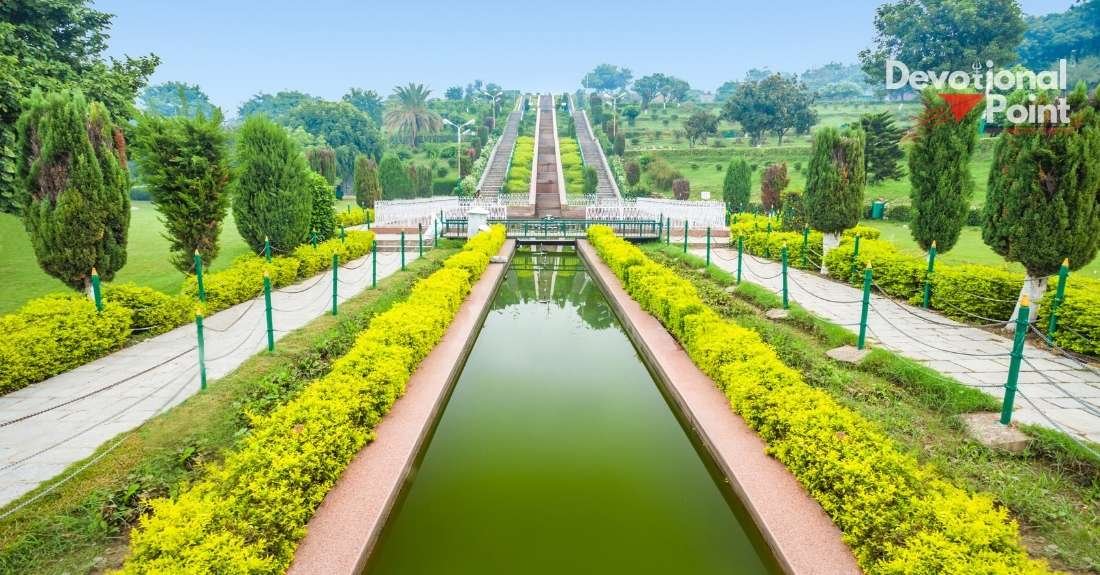
Although people often say “Bahu Fort” and “Bagh-e-Bahu” as though they are the same attraction, they are better understood as connected parts of the same sightseeing area. Bahu Fort is the historic and religious centre, while Bagh-e-Bahu is the terraced garden developed around the fort. The official Jammu Tourism material specifically describes the garden as being laid out in the style of Mughal gardens and offering panoramic views of Jammu city.
The garden is especially attractive when you want to slow down after exploring the fort. Seasonal flowers, green spaces, fountains and elevated viewpoints make it suitable for a relaxed walk and photography. The District Jammu tourism page recommends early morning or late afternoon and highlights spring and winter as comfortable seasons for visiting.
History of Bahu Fort Jammu
The history of Bahu Fort is closely linked with the traditional origin story of Jammu. The official District Jammu tourism page states that the fort was originally constructed by Raja Bahulochan more than 3,000 years ago, although the present structure has been modified and extended over much later periods. Incredible India similarly presents the fort’s history as extending back more than 3,000 years and connects its origin with Raja Bahu Lochan.
It is important to distinguish between the ancient tradition associated with the site and the physical structure visitors see today. Historical buildings rarely survive thousands of years in exactly their original form. The Jammu tourism material explains that the fort was subsequently refurbished by the Dogra rulers, while a Jammu heritage planning document identifies the present fort building with the early 19th-century period associated with Maharaja Gulab Singh.
Raja Bahu Lochan and the Ancient Fort
Raja Bahu Lochan occupies an important place in the traditional history of Jammu. According to the commonly told local account, the fort is associated with the king and the early development of the city. This gives Bahu Fort a significance beyond its walls because the monument is woven into the cultural story of Jammu itself.
The fort’s elevated position also explains its historical importance. Built above the Tawi River, the site provided a commanding position over the surrounding landscape. Even today, standing near the fort gives visitors a striking view across parts of Jammu, showing why this hilltop location would have been strategically valuable in earlier times.
Dogra-Era Renovation
The Bahu Fort seen today reflects centuries of change rather than a single period of construction. Official tourism information states that the Dogra rulers improved and extended the fort, while Jammu’s planning documentation connects the present fort complex with the early 19th century and the reign of Gulab Singh.
This later history is important when looking at the architecture. The fort combines the atmosphere of an old hill fortress with features connected to Jammu’s Dogra heritage. Visitors interested in local history can therefore see Bahu Fort as a physical bridge between Jammu’s legendary past and its more documented royal period.
Why Is Bahu Fort Famous?
Bahu Fort is famous for several reasons, but its strongest attraction is the combination of history, religion and panoramic scenery. It is one of the most recognisable heritage landmarks in Jammu and is located close enough to the city centre to be included easily in a half-day sightseeing plan. The fort’s position above the Tawi also gives it a natural viewpoint that adds a scenic element to the historical visit.
For many local visitors, though, the religious significance is just as important as the fort itself. The complex contains the temple of Goddess Kali, popularly called Bawey Wali Mata Mandir, and the official tourism information notes that Tuesdays and Sundays are regarded as auspicious days when pilgrims visit in larger numbers.
Places to Visit Around Bahu Fort
Bahu Fort is located close to several important Jammu tourist attractions, making it easy to combine the fort and Bagh-e-Bahu with other places during a city sightseeing day. The nearby attractions include historic palaces, temples and other cultural landmarks.
Bawe Wali Mata Mandir
Bawe Wali Mata Mandir, also known as Bawey Wali Mata Temple or Mahakali Temple, is located inside Bahu Fort and is one of the important religious shrines of Jammu. The temple is dedicated to Goddess Kali and is closely associated with the religious significance of the fort. The Directorate of Tourism Jammu states that the present temple was built shortly after the coronation of Maharaja Gulab Singh in 1822.
The shrine attracts a large number of devotees, particularly on Tuesdays and Sundays. It also becomes an important pilgrimage destination during Navratri. Since the temple is an active place of worship, visitors should follow the temple’s local rules and maintain respectful behaviour while visiting.
Maha Maya Temple
Maha Maya Temple is one of the closest attractions to Bahu Fort. The District Jammu administration describes it as being on the ridge behind the fort, surrounded by the City Forest and overlooking the Tawi River and Jammu city. This makes it a natural addition to a Bahu Fort sightseeing route.
Raghunath Temple Jammu
Raghunath Temple is one of Jammu’s best-known religious landmarks and is located in the city centre. The temple complex was started by Maharaja Gulab Singh and completed under Maharaja Ranbir Singh in the 19th century. If you are planning a full day of Jammu sightseeing, it can be combined with Bahu Fort along with other central-city attractions.
Mubarak Mandi Palace
Mubarak Mandi Palace was the royal residence of the Dogra rulers and remained their main seat until 1925. The complex combines Rajasthani and Mughal architectural influences and includes the Dogra Art Museum.
Amar Mahal Palace
Amar Mahal Palace is another historic attraction overlooking the Tawi River. Built in a French-chateau style, the palace now houses a museum and art galleries featuring royal collections and Pahari paintings.
Ranbireshwar Temple
For travellers interested in Jammu’s religious heritage, Ranbireshwar Temple is another worthwhile stop. Located on Shalimar Road, it is a historic Shiva temple built during the Dogra period and is recognised by the District Jammu administration as one of the city’s important religious sites.
Peer Kho Temple
Peer Kho Temple is a cave temple dedicated to Lord Shiva on Circular Road in Jammu. It can be included if you want to explore more of the city’s historic temple circuit after visiting Bahu Fort.
Book Your Jammu Tour Package Now
Garden Attractions and Views
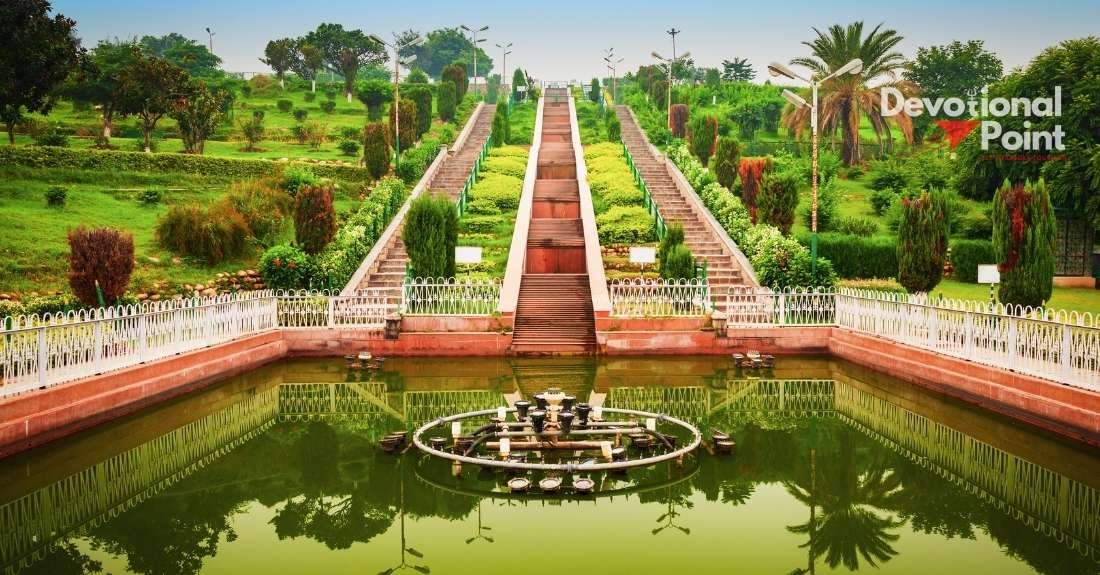
Bagh-e-Bahu is known for terraced landscaping, lawns, flowers, fountains and viewpoints. Its elevated location makes the surrounding city part of the scenery, with the Tawi River adding another visual layer. The garden is therefore popular with visitors who want photographs as well as those looking for a quiet place to spend some time outdoors.
Another attraction in the area is the Bagh-e-Bahu Aquarium. JKTDC describes it as an underground aquarium and awareness centre featuring multiple aquarium caves, a museum, laboratory, multimedia facilities and a collection of freshwater and marine fish. Incredible India also highlights the aquarium as a major addition to the Bagh-e-Bahu area.
Bahu Fort Jammu Visiting Timings
The Bahu Fort Jammu visiting timings can vary across online listings, particularly because the fort complex includes the Bawe Wali Mata Temple and is located next to Bagh-e-Bahu. For general sightseeing, visitors can plan their visit during the daytime and check locally for any changes before travelling.
| Visiting Detail | Timing / Information |
|---|---|
| Bahu Fort Jammu Visiting Timings | Around 5:00 AM – 10:00 PM |
| Bagh-e-Bahu Garden | Around 6:00 AM – 8:00 PM |
| Weekly Opening | Generally open daily |
| Best Time for Sightseeing | Morning or late afternoon |
Note: The timings above are approximate based on currently available online listings. Fort, temple, garden and aquarium timings may differ, and seasonal or festival-day changes are possible.
Best Time to Visit Bahu Fort
For comfortable sightseeing, October to March is generally a good period to visit Jammu and Bahu Fort. Incredible India identifies October through March as the best period for visiting Bahu Fort, while the District Jammu tourism page recommends spring and winter for pleasant garden weather.
Within the day, early morning and late afternoon are particularly attractive. The garden’s outdoor spaces are easier to enjoy when the temperature is more comfortable, and the elevated location makes late afternoon especially appealing for photographs. If your priority is the view rather than simply checking the fort off your list, give yourself enough time to explore the garden instead of arriving just before closing.
Bahu Fort Ticket Price
The Bahu Fort entry fee is commonly listed at around ₹10 for adults and ₹5 for children, although current charges should be confirmed at the ticket counter because local entry fees can change. Several current travel sources report these amounts, but there is not a single clearly displayed official online tariff covering every part of the complex.
This distinction matters because visitors may encounter separate charges for attractions or facilities. For example, some travel listings report additional charges for the aquarium or photography. Rather than assuming that one ticket covers every attraction, ask at the entrance about the garden, fort, aquarium and photography charges applicable on the day of your visit.
| Visitor/Service | Commonly reported charge |
|---|---|
| Adult Bahu Fort entry | ₹10 |
| Child entry | ₹5 |
| Photography | May have a separate charge |
| Aquarium | May have a separate ticket |
For a family trip, it is therefore sensible to carry some cash in small denominations, even if digital payment options are available. It makes small entry purchases easier and avoids unnecessary delays at the counter.
Bahu Fort Location
Bahu Fort is located in Gorkha Nagar, Jammu, Jammu & Kashmir, on a hill overlooking the Tawi River. The District Jammu website places it about 5 km from Jammu city centre, while the official page gives approximate distances of 4 km from Jammu Tawi railway station and about 4.5 km from the Jammu bus stand.
The location makes Bahu Fort convenient for travellers who have limited time in Jammu. You do not need to dedicate an entire day simply to reaching the monument from the city centre. It can easily be combined with other attractions in a Jammu sightseeing itinerary, particularly if you are staying near the central city areas.
Bahu Fort Distance from Major Places
Bahu Fort is located in Gorkha Nagar, Jammu, on a hill overlooking the Tawi River. It is about 5 km from Jammu city centre, making it relatively easy to include in a Jammu sightseeing itinerary.
| Major Place | Approximate Distance from Bahu Fort |
|---|---|
| Jammu City Centre | 5 km |
| Jammu Tawi Railway Station | About 4 km |
| Jammu General Bus Stand | About 4–5 km |
| Jammu Airport | About 8–10 km |
| Bagh-e-Bahu Garden | Adjacent to the fort |
| Tawi River | Beside the fort |
The exact road distance can vary depending on the starting point and route. The District Jammu tourism website lists Bagh-e-Bahu at around 4 km from Jammu Tawi Railway Station and about 10 km from Jammu Airport, while JKTDC gives approximately 4 km from the railway station and 9 km from the airport for the Bagh-e-Bahu Aquarium near the fort.
For travellers arriving by train, Jammu Tawi Railway Station is the most convenient major transport point, with Bahu Fort roughly 4 km away. If you are arriving by air, Jammu Airport is approximately 8–10 km from the Bahu Fort and Bagh-e-Bahu area, depending on the exact destination point.
How to Reach Bahu Fort
If you arrive by train, Jammu Tawi Railway Station is the nearest major railway station. The official District Jammu tourism page places the railway station approximately 4 km from Bahu Fort. From the station, you can use a taxi, auto-rickshaw or local transport depending on availability and traffic conditions.
If you arrive by air, Jammu Airport is the nearest airport. The District Jammu website gives the distance as approximately 8 km to Bahu Fort, while its Bagh-e-Bahu page gives about 10 km to the garden, so the exact distance depends on the destination point and route used.
By road, the attraction is straightforward to reach from Jammu city. Local taxis and auto-rickshaws are practical choices, particularly if you are travelling with family or carrying luggage. If you are using a private vehicle, allow additional time during busy religious days, weekends and festival periods.
FAQs About Bahu Fort & Garden
1. What is Bahu Fort famous for?
Bahu Fort is famous for its ancient history, hilltop location overlooking the Tawi River and the Bawe Wali Mata Temple located inside the fort. It is also known for the nearby Bagh-e-Bahu terraced garden and panoramic views of Jammu.
2. What are the timings of Bahu Fort Jammu?
Current online sources publish different timings. Several listings show approximately 5:00 AM to 10:00 PM, while other sources give seasonal or different schedules. Visitors should confirm the current timing before travelling.
3. How much is the Bahu Fort ticket price?
The commonly reported entry fee is ₹10 for adults and ₹5 for children. Additional attractions or photography may have separate charges, so confirm the applicable fees at the venue.
4. How far is Bahu Fort from Jammu city?
Bahu Fort is approximately 5 km from Jammu city centre. It is also around 4 km from Jammu Tawi Railway Station according to the District Jammu tourism website.
5. What is the best time to visit Bahu Fort and Garden?
October to March is generally considered a comfortable period for visiting Jammu and Bahu Fort. Within the day, early morning and late afternoon are good choices because the weather is generally more pleasant for exploring the outdoor garden and enjoying the views.
Jammu & Vaishno Devi Tour Package
Book Now
The Vaishno Devi Shiv Khori Tour Package 2 Night 3 Days from Katra is a perfectly curated pilgrimage for devotees…
Dehradun Tour Package Explore the spiritual essence for and natural beauty of Uttarakhand with Devotional Point Tour & Travels, your…
Are you dreaming of an unforgettable honeymoon or a luxurious escape amidst breathtaking natural beauty? Look no further than Kashmir,…

Are you dreaming of a honeymoon that combines romance, adventure, and unforgettable landscapes? Look no further than the stunning beauty…

Are you dreaming of a honeymoon that combines romance, adventure, and unforgettable landscapes? Look no further than the stunning beauty…
Looking for a perfect blend of adventure and spirituality? The Chopta Tungnath Package from Delhi is exactly what you need….