
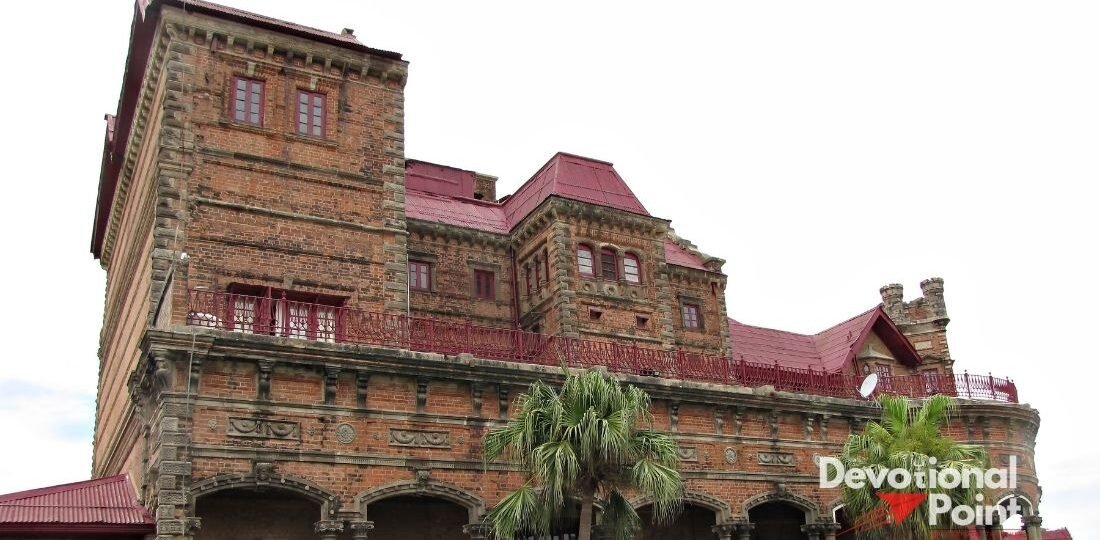
Amar Mahal Palace Museum is one of the most distinctive heritage attractions in Jammu, known for its European-inspired architecture, royal Dogra history, traditional Pahari paintings and impressive collection of artwork. Situated on a hill overlooking the Tawi River, the former royal residence offers visitors an opportunity to explore a different side of Jammu beyond its famous temples and pilgrimage routes.
The palace was originally built for Raja Amar Singh, a member of the Dogra royal family, during the nineteenth century. Today, it houses a museum and art galleries preserving important pieces of Jammu’s royal and cultural heritage. Its most recognised exhibit is the golden throne of the Dogra rulers, traditionally described as weighing approximately 120 kilograms. The museum also features miniature paintings, royal portraits, works by renowned Indian artists and a library containing rare books.
If you are planning a visit, this guide covers Amar Mahal Palace Museum Jammu timings, entry tickets, location, history, architectural features, major attractions and practical travel tips to help you organise your trip.
Where Is Amar Mahal Palace Museum Located?
Amar Mahal Palace Museum is located on Palace Road in the Karan Nagar area of Jammu city, Jammu and Kashmir. The property occupies an elevated position overlooking the Tawi River, with views towards the surrounding hills.
Its location makes it a convenient heritage stop for travellers exploring Jammu city. Unlike attractions that require a long mountain drive or a trek, the palace can be reached by road from the main urban areas.
The museum is particularly suitable for visitors interested in history, architecture, art and the cultural heritage of the Dogra rulers. It can also be included in a wider Jammu sightseeing itinerary alongside other historic landmarks.
Address: Amar Mahal Palace Museum and Library, Palace Road, Karan Nagar, Jammu, Jammu and Kashmir, India.
How Far Is Amar Mahal Palace Museum from Major Transport Points?
The following distances are approximate and can vary depending on the exact starting point and route.
| Starting Point | Approximate Distance |
|---|---|
| Jammu Tawi Railway Station | 8 km |
| Jammu Airport | 10 km |
| Jammu General Bus Stand | 3 km |
These distances are consistent with the information published by the Jammu district administration. Allow additional time for city traffic, particularly during busy travel periods and festivals.
Amar Mahal Palace Museum Timings
Amar Mahal Palace Museum timings are generally listed according to the summer and winter seasons. However, published schedules differ across travel websites, making it important to confirm the current opening hours before setting out.
The Government of India’s Incredible India tourism portal lists the following schedule:
| Season | Published Opening Hours |
|---|---|
| Summer | 9:00 AM–5:00 PM |
| Winter | 10:00 AM–5:00 PM |
| Monday | Closed |
Some travel directories display a midday break, with separate morning and afternoon visiting sessions. For this reason, do not assume that the museum remains continuously open throughout the day without checking first.
What Is the Best Time to Visit During the Day?
If the museum is open, arriving in the morning is a sensible choice. An early visit gives you more time to explore the galleries, appreciate the architecture and enjoy the views without having to rush before closing.
Allow approximately one to two hours for a general visit. Visitors who want to examine the paintings carefully, learn about the royal family or explore available library collections may need more time.
Before travelling, confirm three things:
- Whether the museum is open on your intended date.
- Whether the galleries you want to see are accessible that day.
- Whether the museum has special opening arrangements or temporary closures.
Amar Mahal Palace Museum Ticket Price
The entry fee for Amar Mahal Palace Museum should be checked before visiting because published prices are not consistent across all online sources.
The Incredible India tourism portal lists these admission charges:
| Visitor Category | Published Admission Fee |
|---|---|
| Adults | ₹10 per person |
| Children | ₹5 per person |
| Foreign nationals | ₹50 per person |
These are listed rates, not a guarantee of the current amount payable at the entrance. More recent visitor reports and other travel listings mention different ticket prices and possible separate charges for access to different sections of the property.
Before planning your budget, ask the museum whether the current ticket covers all accessible galleries, the upper floors and any special exhibits. If guided tours, photography or other services are available, check whether they require an additional payment.
Is There a Separate Ticket for Different Museum Sections?
Some visitor reports describe separate charges for different floors or sections. However, the current ticket structure could not be established consistently from the official tourism information reviewed for this guide.
Do not rely on an old ticket price or assume that one ticket includes every part of the building. Confirm the applicable fee and gallery access arrangements with the museum before purchasing your ticket.
History of Amar Mahal Palace
Amar Mahal Palace has an important place in the royal history of Jammu. Its story is connected with the Dogra dynasty, which played a major role in shaping the political and cultural history of the region.
The Palace Was Built for Raja Amar Singh
The palace was planned in the nineteenth century for Raja Amar Singh, a Dogra ruler. The Jammu district administration identifies 1862 as the year associated with its construction, while other heritage accounts explain that the building was designed earlier and completed during the 1890s.
These dates refer to different stages of the palace’s development, so it is more accurate to describe Amar Mahal as a nineteenth-century royal residence rather than assign its entire construction to a single year.
The building’s design was unusual in Jammu because it drew inspiration from European château architecture. Its elevated position and prominent exterior gave it a distinctive appearance among the region’s traditional palaces.
Its Connection with Maharani Tara Devi
Amar Mahal later became associated with Maharani Tara Devi, the wife of Maharaja Hari Singh. She lived in the palace until her death in 1967.
The royal residence therefore preserves more than the architectural history of the Dogra dynasty. It also offers a connection to the personal lives, tastes and domestic surroundings of members of the former royal family.
Certain preserved rooms and personal artefacts help visitors understand how a royal residence functioned beyond its formal halls and public ceremonies.
Conversion into a Museum in 1975
Following Maharani Tara Devi’s death, her son Dr. Karan Singh and his wife Yasho Rajya Lakshmi helped establish the palace as a museum dedicated to preserving art, literature and royal heritage.
The museum was inaugurated on 13 April 1975 by then Prime Minister Indira Gandhi. The property came under the Hari-Tara Charitable Trust, which is associated with its museum and cultural activities.
The transformation from royal residence to museum gave the building a new purpose: conserving important artworks, maintaining historical collections and encouraging an appreciation of Indian art and culture.
Today, Amar Mahal is an important cultural attraction for people who want to understand Jammu through its royal heritage, artistic traditions and architectural history.
Architecture of Amar Mahal Palace
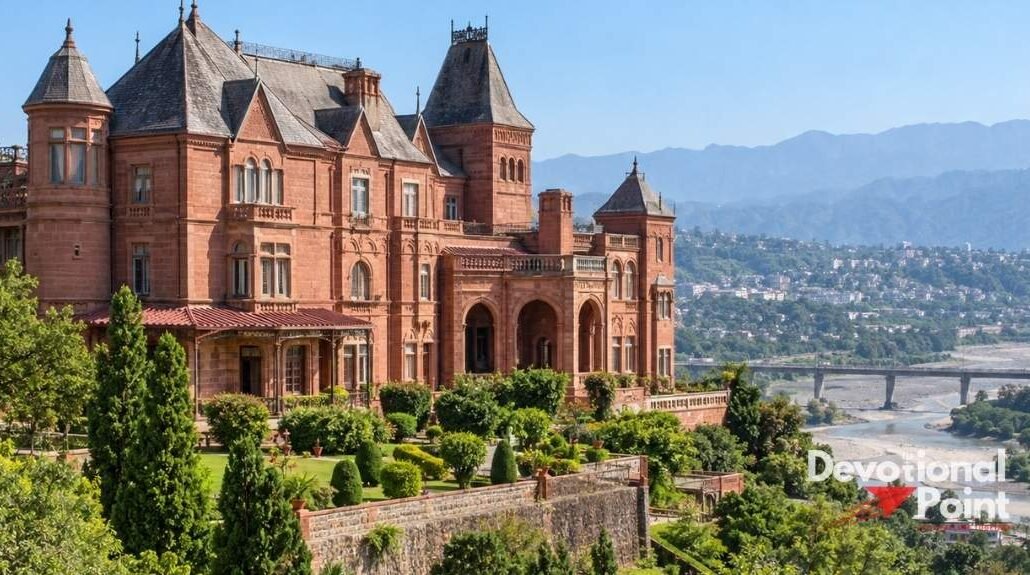
One of the first things visitors notice about Amar Mahal is its resemblance to a European château. Rather than following the appearance of a conventional Indian palace, the building combines European-inspired design features with materials and craftsmanship associated with the region.
French Château-Inspired Design
The palace was designed in a French château style, with an imposing exterior and carefully arranged windows, balconies and covered passages.
Its red-toned walls make it stand out against the surrounding greenery. The building’s elevated position also gives it a commanding presence over the landscape.
The architectural design reflects the influence of European styles on certain royal buildings constructed in India during the nineteenth century. It also demonstrates how the Dogra court incorporated different aesthetic influences into its built environment.
Red Stonework and Distinctive Windows
The exterior combines red sandstone and brickwork. The contrast between the reddish walls, rooflines and surrounding landscape contributes to the palace’s distinctive appearance.
French-style windows and balcony features add to the European character of the building. Covered passages and supporting columns form another notable part of its architectural arrangement.
Visitors interested in photography and heritage architecture should spend some time observing these features rather than concentrating only on the museum’s indoor exhibits.
A Hilltop Setting Overlooking the Tawi River
The palace’s location is another important part of its appeal. It stands on elevated ground overlooking the Tawi River, with the surrounding hills forming part of the wider landscape.
The view provides a different perspective on Jammu’s geography and historic urban setting. The combination of the palace, river valley and distant hills also makes the property visually distinct from many other attractions in the city.
The setting is especially relevant for travellers interested in architectural photography, although visitors should respect any restrictions on photography inside the museum.
What to See Inside Amar Mahal Palace Museum
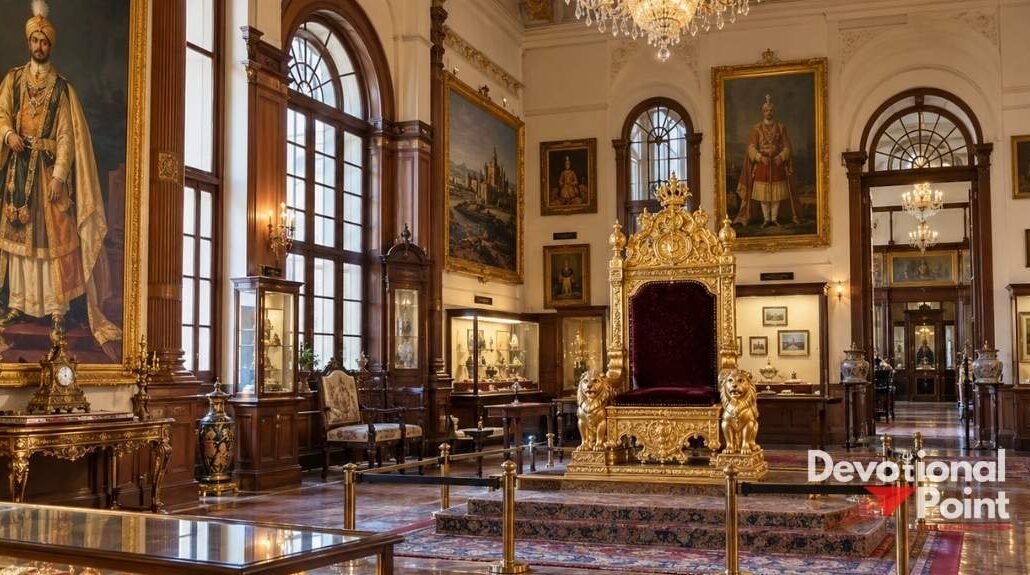
The museum is best known for its collection of royal artefacts and artworks. Its highlights include the golden throne, Pahari miniature paintings, portraits of Dogra rulers and works by well-known Indian artists.
The number of galleries open to visitors and the accessibility of individual rooms may vary, so check the current display arrangements when you arrive.
1. The Golden Throne of the Dogra Rulers
The golden throne is the museum’s most widely recognised exhibit. It is traditionally described as weighing approximately 120 kilograms and is associated with the Dogra rulers of Jammu.
The throne is notable for its ceremonial character and the craftsmanship represented by its design. It provides a striking example of how royal objects communicated status, authority and prestige.
For visitors unfamiliar with the history of Jammu’s ruling family, the throne also serves as an introduction to the region’s former royal court.
Because of the object’s value and historical significance, viewing arrangements may involve protective barriers or glass panels. Visitors should follow the museum’s instructions and avoid touching display cases.
2. Pahari Miniature Paintings
Pahari painting is one of the important artistic traditions associated with the Himalayan foothills. These paintings are valued for their detailed figures, expressive compositions and depictions of religious, literary and romantic narratives.
The museum’s collection includes Pahari works that help illustrate the relationship between regional art, storytelling and royal patronage.
Rather than viewing the paintings simply as decorative objects, look at how artists use colour, clothing, landscape and facial expressions to communicate a story. The smaller scale of miniature paintings often rewards careful observation.
The collection is particularly relevant to visitors interested in the artistic history of Jammu and the neighbouring hill regions.
3. The Nala-Damayanti Painting Series
The Nala-Damayanti series is among the museum’s notable artistic highlights. It is associated with the story of King Nala and Princess Damayanti, a well-known narrative from Indian literary tradition.
The story explores love, separation, hardship and reunion. In traditional visual storytelling, individual paintings can represent different episodes rather than a single moment.
The museum is known for a series of approximately 47 miniature paintings depicting this narrative. The collection is especially interesting because it allows visitors to explore how artists translated a literary story into visual form.
Take time to examine the details within each composition, including the figures’ clothing, gestures and surroundings. These details help communicate the atmosphere and meaning of the story.
4. Dashavatara Gallery
The Dashavatara Gallery is associated with artworks depicting the ten principal incarnations of Lord Vishnu.
Dashavatara themes are important in Hindu religious and artistic traditions. The sequence of incarnations has inspired paintings, sculpture, temple decoration and illustrated religious narratives across India.
The gallery provides an opportunity to see how a familiar religious theme can be interpreted through a modern artistic approach.
For visitors interested in religious art, the collection adds another dimension to the museum’s displays beyond royal portraits and historical objects.
5. Contemporary Indian Art
Amar Mahal is not limited to historical artefacts. Its art collection also includes works associated with recognised Indian artists, such as M. F. Husain, G. R. Santosh, J. Swaminathan and Laxman Pai.
These works broaden the museum’s scope by connecting Jammu’s heritage with developments in modern and contemporary Indian art.
Visitors may notice differences in technique, subject matter, colour and artistic expression when comparing these works with traditional miniature paintings.
The contemporary collection is particularly worthwhile for students, artists and anyone interested in the development of Indian visual culture.
Keep in mind that the exact works on display can change, and not every item in the collection is necessarily exhibited at all times.
6. Royal Family Portraits
Portraits of members of the Dogra royal family help establish the historical context of the palace.
These paintings and photographs are more than decorative elements. They offer visual records of the people associated with the building and help visitors connect individual rulers with Jammu’s political past.
Pay attention to the arrangement of the portraits and the way royal figures are represented. Clothing, posture and formal presentation can reveal something about the conventions of royal portraiture.
The collection is especially useful for visitors who want to understand the people behind the palace’s history.
7. Maharani Tara Devi’s Preserved Quarters
The palace is also associated with preserved rooms connected with Maharani Tara Devi.
Her former private quarters are known for period furnishings and personal objects, including a distinctive silver bedspread and a Victorian-style bathroom.
These spaces offer a different experience from the formal galleries. Instead of focusing only on political history or fine art, they provide a glimpse into the domestic surroundings of a royal household.
Access to these rooms should be confirmed on arrival because the availability of individual sections can depend on current museum arrangements.
8. Amar Mahal Library
The library is another significant part of the palace’s cultural legacy. Official tourism information describes a collection of approximately 25,000 books covering subjects such as literature, philosophy, science, politics and other disciplines.
Heritage documentation has also referred to a larger overall collection, so the exact current number of volumes may differ depending on which collection or catalogue is being counted.
The library’s importance lies not just in its size but in its role in preserving written material and supporting the study of art, history and culture.
Visitors should distinguish between a museum display and a working research library. Access to rare books, reading facilities and research collections may be subject to separate rules or prior arrangements.
If you are visiting primarily to consult books or conduct research, contact the institution in advance rather than assuming that all volumes are available for public browsing.
How to Reach Amar Mahal Palace Museum Jammu
Amar Mahal Palace Museum is accessible by road from the main transport hubs in Jammu. You can travel by taxi, auto-rickshaw or private vehicle, depending on your starting point and convenience.
By Taxi or Cab
A taxi or app-based cab, where available, is a convenient option for reaching the palace from Jammu Tawi Railway Station, Jammu Airport or your hotel.
Tell the driver that you want to visit Amar Mahal Palace Museum on Palace Road. If you are planning to explore several attractions in one day, you can also ask about arranging a sightseeing trip covering multiple stops.
Confirm the return pickup arrangement if you expect to spend a significant amount of time inside the museum.
By Auto-Rickshaw
Auto-rickshaws may be suitable for travelling from nearby parts of Jammu city. Availability and fares depend on the starting point, traffic and the driver’s terms.
Agree on the fare before beginning the journey if the ride is not metered.
By Private Car
Visitors travelling with family or carrying luggage may prefer a private car. The museum can be included in a broader city sightseeing route.
Check parking arrangements locally rather than assuming that dedicated visitor parking will always be available.
By Train
The nearest major railway station is Jammu Tawi Railway Station. From the station, you can continue to the museum by taxi or another local transport option.
Allow additional time for collecting luggage and travelling through city traffic.
By Air
Jammu Airport is the nearest airport. After landing, you can hire a taxi or arrange a transfer to the museum or your accommodation.
If Amar Mahal is part of a short stopover itinerary, confirm the museum’s opening hours and calculate travel time in both directions before committing to a visit.
Best Time to Visit Amar Mahal Palace Museum
The most suitable time to visit depends on the weather, your wider Jammu itinerary and the museum’s current opening schedule.
October to March
The cooler months are generally comfortable for exploring Jammu’s outdoor heritage attractions. They can be a good choice if you want to combine Amar Mahal with other sightseeing stops without dealing with the intense heat that can occur during summer.
Winter opening hours may differ from the summer schedule, so check the timings before travelling.
April to June
The warmer months can also be suitable for a museum visit, particularly if you plan indoor activities during the hotter part of the day.
Carry drinking water for your journey, and consider arranging transport in advance if you intend to visit several places in Jammu.
July to September
Monsoon conditions can affect road travel and outdoor sightseeing. Check the local weather forecast and allow extra time for your journey.
The museum itself is primarily an indoor cultural attraction, but access, travel conditions and opening arrangements should still be confirmed.
Morning or Afternoon?
A morning visit is a practical choice because it leaves time for other attractions later in the day. If you plan to visit in the afternoon, check the last admission time rather than relying only on the published closing time.
Places to Visit Near Amar Mahal Palace Museum
If you have additional time, Amar Mahal can be combined with other heritage and cultural attractions in Jammu. Travel times between stops will depend on traffic and the exact route.
Mubarak Mandi Palace Complex
Mubarak Mandi is an important historic palace complex associated with the Dogra rulers. Its architecture reflects several influences, including Mughal, Rajasthani, Baroque and European styles.
It is a useful next stop for visitors interested in comparing different architectural traditions associated with Jammu’s royal history.
Raghunath Temple
Raghunath Temple is one of Jammu’s best-known religious landmarks. The temple complex is associated with Lord Rama and features multiple shrines.
Visitors should check current temple entry rules and any security arrangements before visiting.
Ranbireshwar Temple
Ranbireshwar Temple is another important religious site in Jammu, dedicated to Lord Shiva. It can be included in a city sightseeing itinerary alongside heritage attractions.
Dress respectfully and allow sufficient time for temple visits.
Bahu Fort and Bagh-e-Bahu
Bahu Fort is a historic fort associated with Jammu’s older history, while Bagh-e-Bahu is a landscaped garden overlooking the Tawi River.
These attractions offer a different experience from Amar Mahal, combining historic architecture, religious significance and outdoor scenery.
Frequently Asked Questions About Amar Mahal Palace Museum Jammu
1. What are the timings of Amar Mahal Palace Museum Jammu?
The Incredible India tourism portal lists summer timings as 9:00 AM to 5:00 PM and winter timings as 10:00 AM to 5:00 PM. Monday is listed as the weekly closing day. Confirm the current schedule before visiting because other online listings show different hours.
2. What is the entry ticket price for Amar Mahal Palace Museum?
The published admission rates on the Incredible India portal are ₹10 for adults, ₹5 for children and ₹50 for foreign nationals. These prices may not reflect the current ticket structure, so confirm the fee directly with the museum.
3. Where is Amar Mahal Palace Museum located?
The museum is located on Palace Road in Karan Nagar, Jammu, Jammu and Kashmir. It stands on elevated ground overlooking the Tawi River.
5. Who built Amar Mahal Palace?
The palace was built for Raja Amar Singh of the Dogra royal family. Its planning is associated with 1862, although other historical accounts describe completion during the 1890s.
6. When was Amar Mahal Palace converted into a museum?
The museum was inaugurated on 13 April 1975 by then Prime Minister Indira Gandhi. Its establishment was intended to preserve and promote art, literature and the region’s cultural heritage.
Book Jammu City Tour Package Now
Jammu & kashmir Tour Package
Book Now
The Vaishno Devi Shiv Khori Tour Package 2 Night 3 Days from Katra is a perfectly curated pilgrimage for devotees…
Are you dreaming of an unforgettable honeymoon or a luxurious escape amidst breathtaking natural beauty? Look no further than Kashmir,…

Are you dreaming of a honeymoon that combines romance, adventure, and unforgettable landscapes? Look no further than the stunning beauty…

Are you dreaming of a honeymoon that combines romance, adventure, and unforgettable landscapes? Look no further than the stunning beauty…
Chardham Yatra Package 2025 Includes – Yamunotri, Gangotri, Kedarnath and Badrinath Temple Darshan which is 11 nights and 12Days Tour…
Here's how you can book your spot for the Vaishno Devi Attka Aarti Online Booking Procedure. The Aarti at Vaishno…